A 32T32R Massive MIMO O-RAN radio for band n78, with integrated ULPI for enhanced uplink performance.
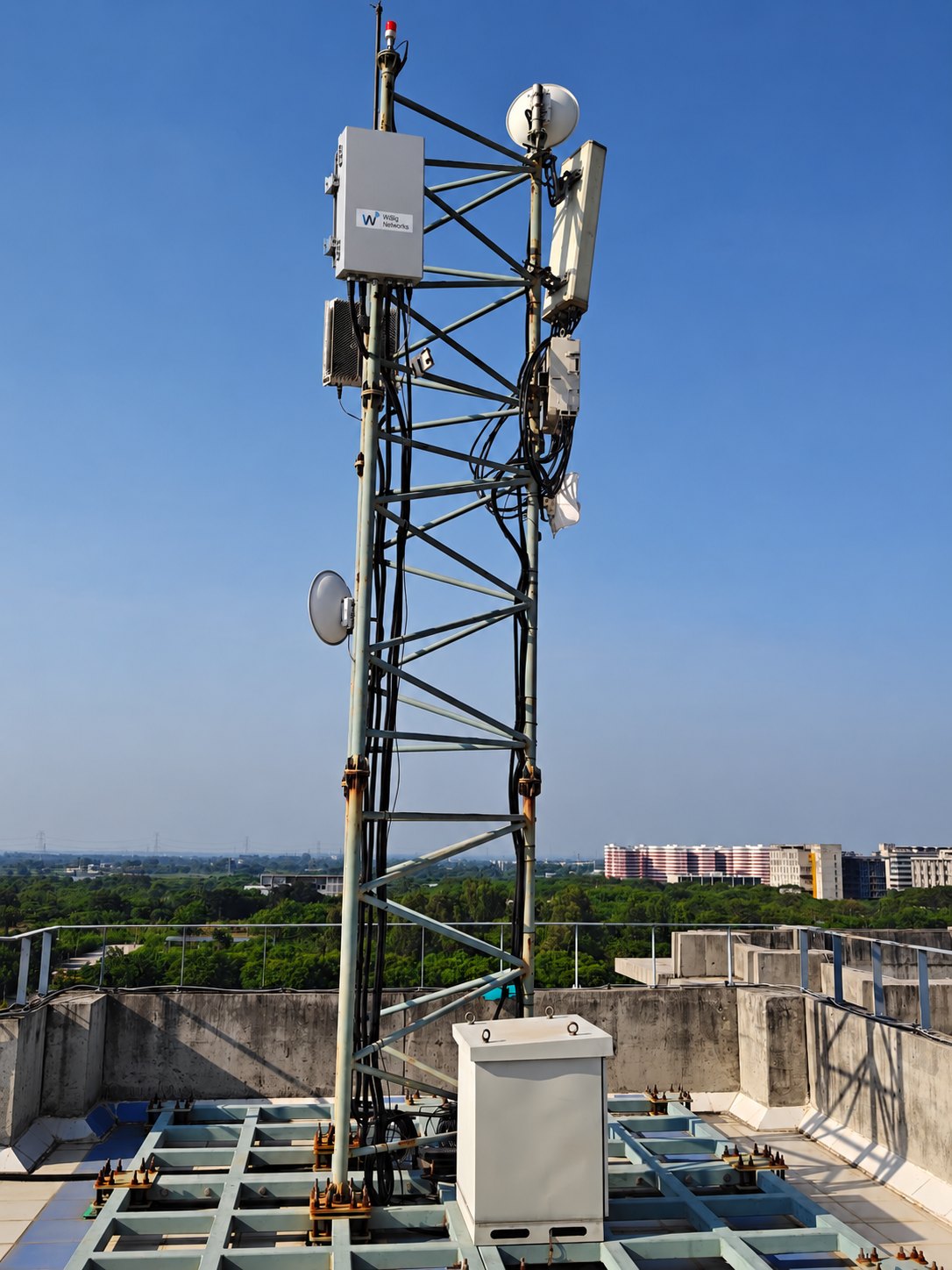
Navabeam is a 32T32R Massive MIMO O-RAN radio unit for band n78, supporting O-RAN 7.2x fronthaul with WiSig’s ULPI technology for advanced uplink processing inside the radio.
It interoperates with standards-conformant O-DUs and supports both ULPI and conventional non-ULPI operation.
200W Aggregate Transmit Power
32 transmit and 32 receive paths, with up to 76 dBm EIRP.
3.3–3.67 GHz | 200 MHz IBW / OBW
Supports two Component carriers with 100 MHz configurations.
O-RAN 7.2 B,C | 2×25G SFP28
Standards-based fronthaul with PTP/IEEE 1588 and SyncE synchronization.
30 kHz SCS | 256-QAM | Short, Long PRACH
Supports QPSK, 16-QAM, 64-QAM and 256-QAM operation.
IP65 | −40 °C to +55 °C | Passive cooling
Designed for pole- or wall-mounted outdoor deployments.
Advanced Uplink Processing
Supports both ULPI DMRS-BF-EQ and DMRS-BF-NEQ architectures inside radio.
Key radio, fronthaul, and deployment specifications.
| Radio configuration | 32T32R Massive MIMO, TDD. |
|---|---|
| Frequency & bandwidth | Band n78, 3.3–3.67 GHz; 200 MHz instantaneous bandwidth (IBW) and 200 MHz occupied bandwidth (OBW). |
| Carriers & modulation | 2 Component carriers: 100 MHz each; 30 kHz SCS; QPSK, 16-QAM, 64-QAM and 256-QAM; Short, Long PRACH. |
| RF output | 200W aggregate power at antenna; up to 73 dBm EIRP per polarization. |
| Fronthaul | O-RAN 7.2B/C over 2 × 25G SFP28; O-RAN WG4 CUS v019.00, MP v07.00 and IOT v02.00; Release V2.0 / V3.0 / V4.0. |
| Synchronization | PTP / IEEE 1588 (G.8265.1), SyncE and GPS. |
| Antenna system | Cross-polarized ±45° / −45° with >20 dB cross-polar isolation; integrated antenna calibration network; AISG 3.0. |
| Standards compliance | 3GPP 5G NR Release 16; 3GPP TS 38.141-1, TS 38.141-2 and TS 38.113. |
Detailed compliance, limits and operating conditions are available in the product specification.
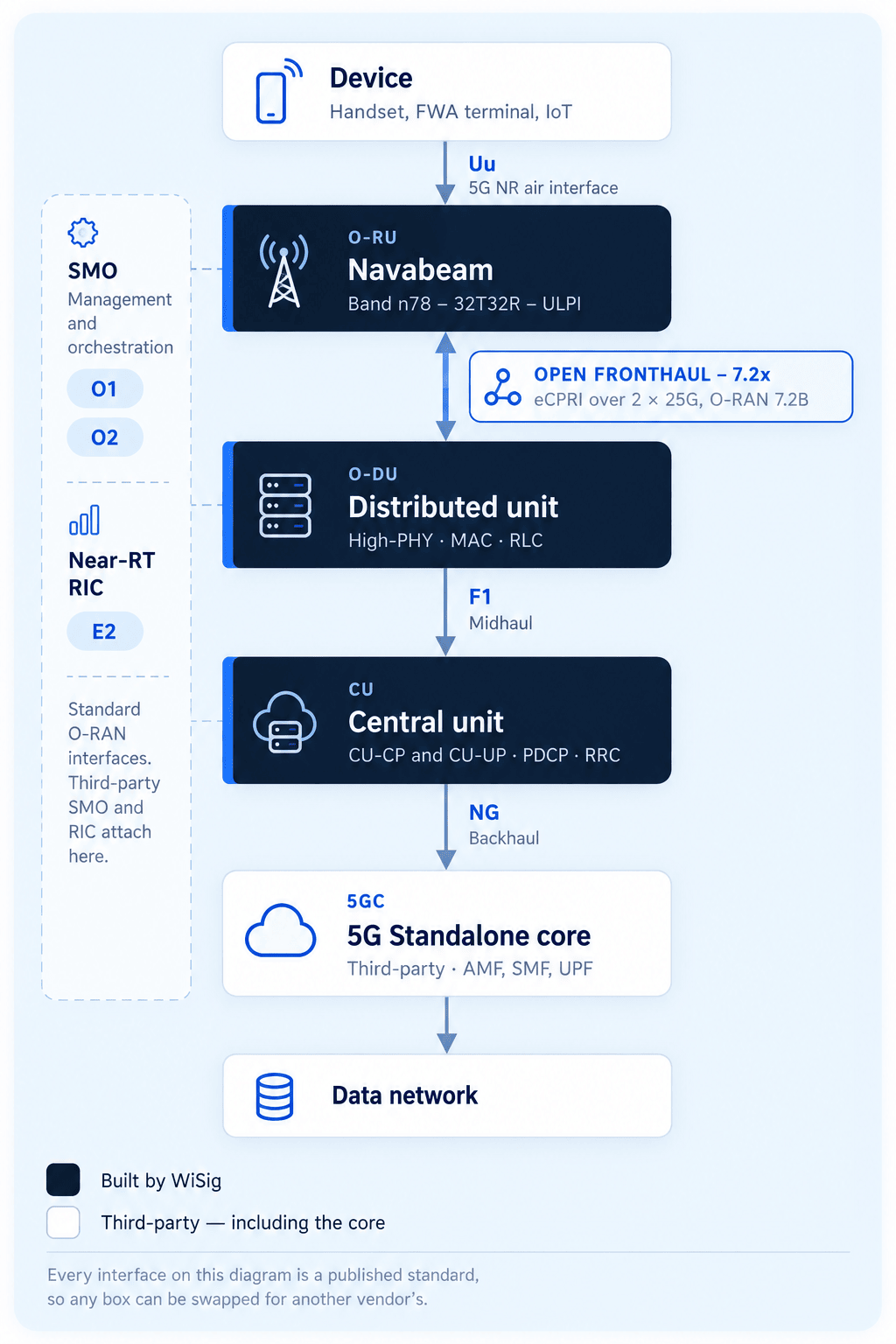
While being one of the earliest in the industry to support ULPI, we also have higher performance equalisers that can handle any wireless channel in a superior manner compared to other vendors.
That matters commercially. A vendor whose differentiator is lock-in makes you dependent. A vendor whose differentiator is performance helps you actually win with the operator
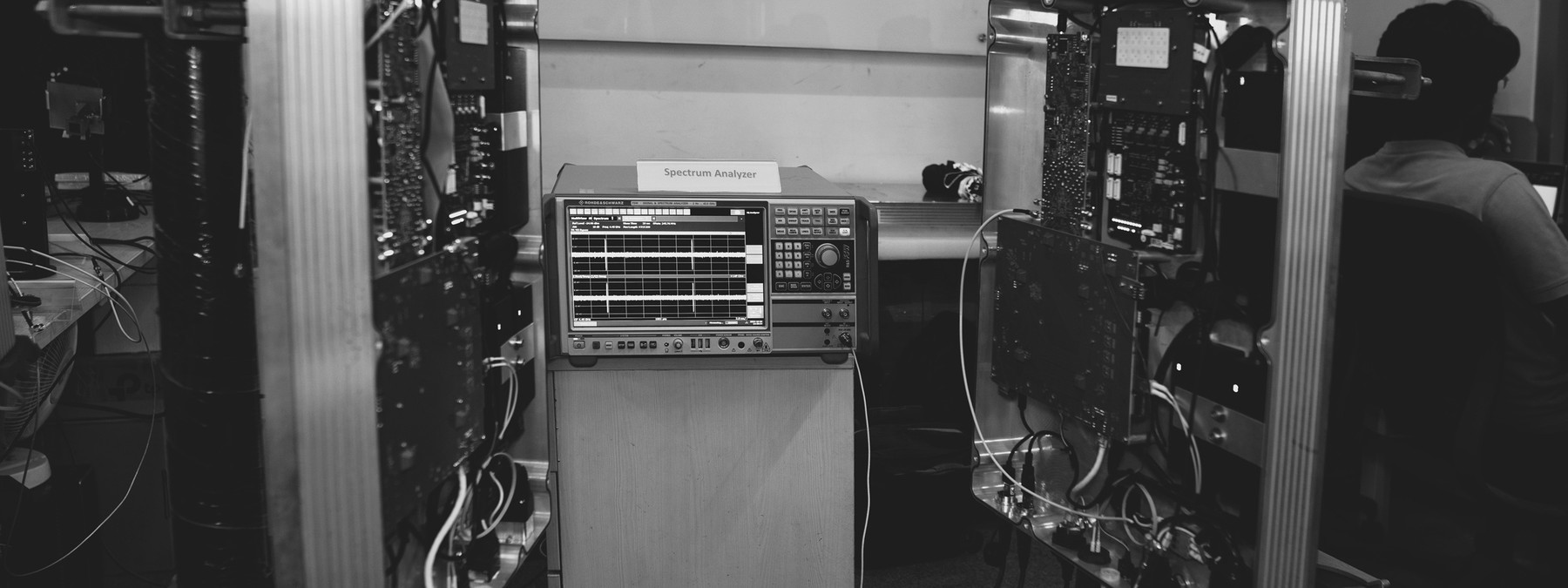
Operator trials, private 5G deployments, interoperability testing or academic collaboration.