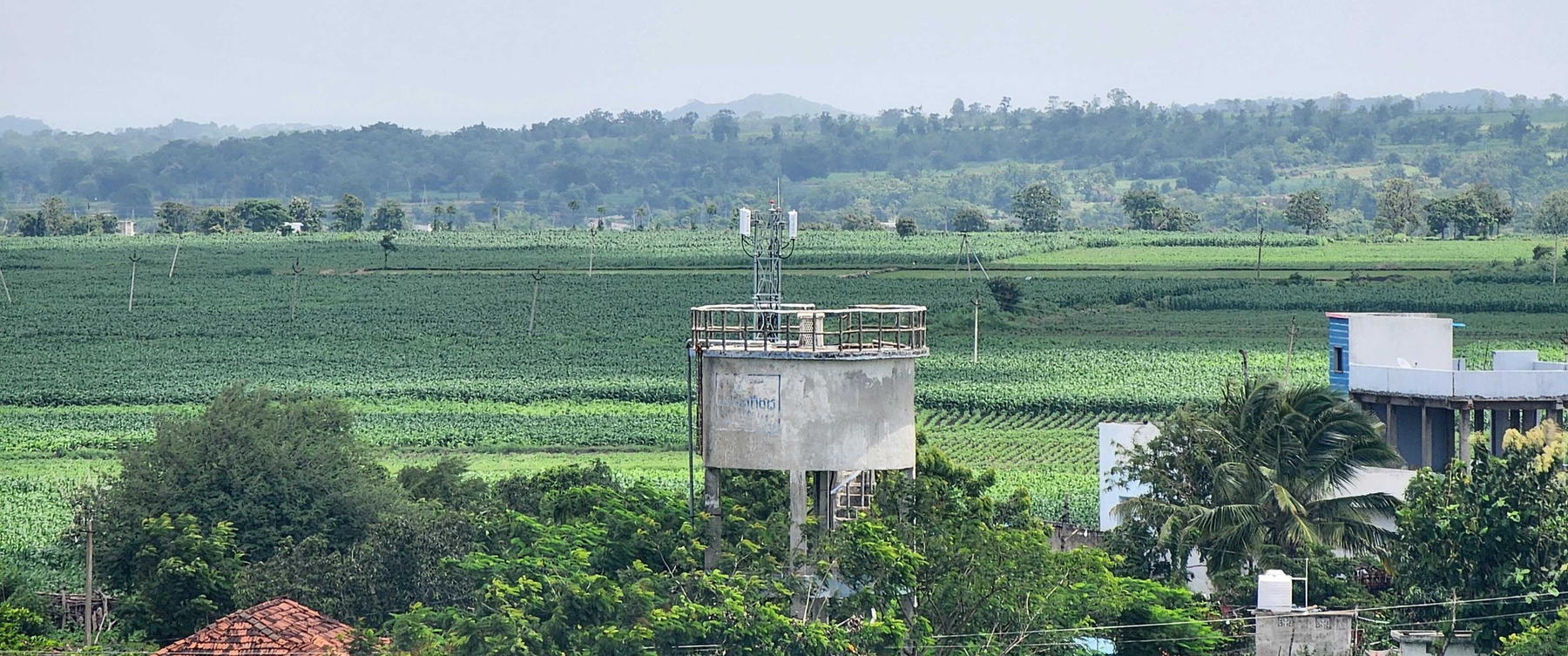
Fixed wireless access built around the uplink, because in a large rural cell the uplink is what fails first.
Extending coverage to a village means large cells, because there is no other economic way to do it. But cell size is limited by the weakest link, and that is a handset trying to transmit back to a site several kilometres away.
Operators respond by building more sites, which is precisely the cost that stopped the network being built in the first place. The economics never close.
Fixed wireless is what makes the arithmetic work. One site on a mast covers the settlements around it, a household takes an outdoor terminal with a clear view of the tower, and a Wi-Fi access point indoors carries the last few metres. Nothing trenched, nothing run house to house, and a connection that can be turned up in an afternoon. These are the areas the fibre footprint stops short of, and they are the ones this is built for.
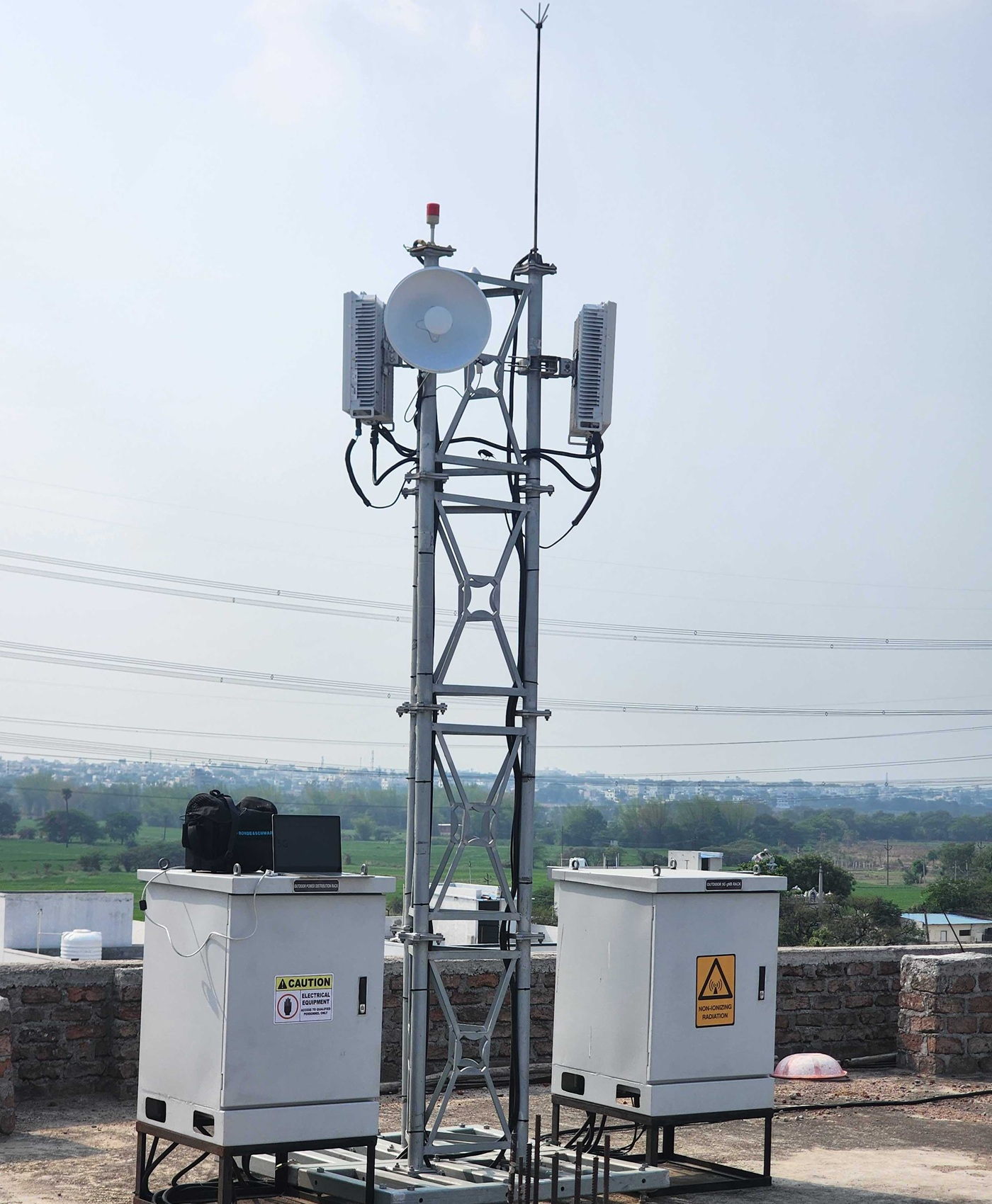
ULPI lifts cell-edge uplink substantially. That extends the radius at which a site delivers usable service, which means fewer sites for the same coverage.
A larger usable radius means fewer masts, less backhaul and less civil works for the same footprint. That is where rural economics are won or lost.
Our fixed wireless terminals are hardened for outdoor mounting on a pole, with a clear view of the mast and our own software stack, so a household starts from a far better link budget than a phone in a pocket.
The radio and the base station are designed as one, so a deployment does not wait on integration between two vendors' roadmaps. The core is whichever one the operator already runs.
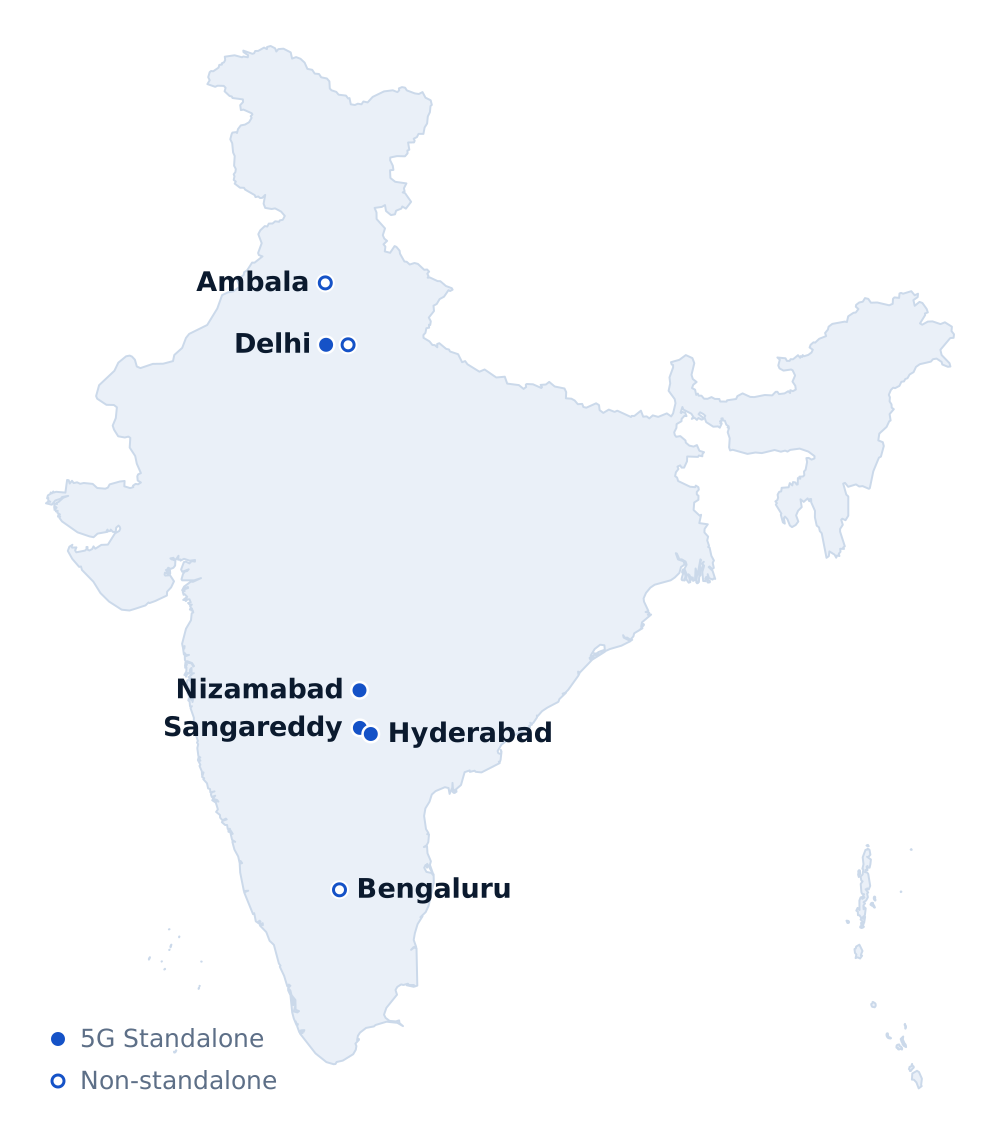
Standalone and non-standalone sites carrying live traffic, from Ambala and Delhi in the north to Bengaluru in the south. The village site near IIT Hyderabad, written up below, is the one that shows what this solution does.
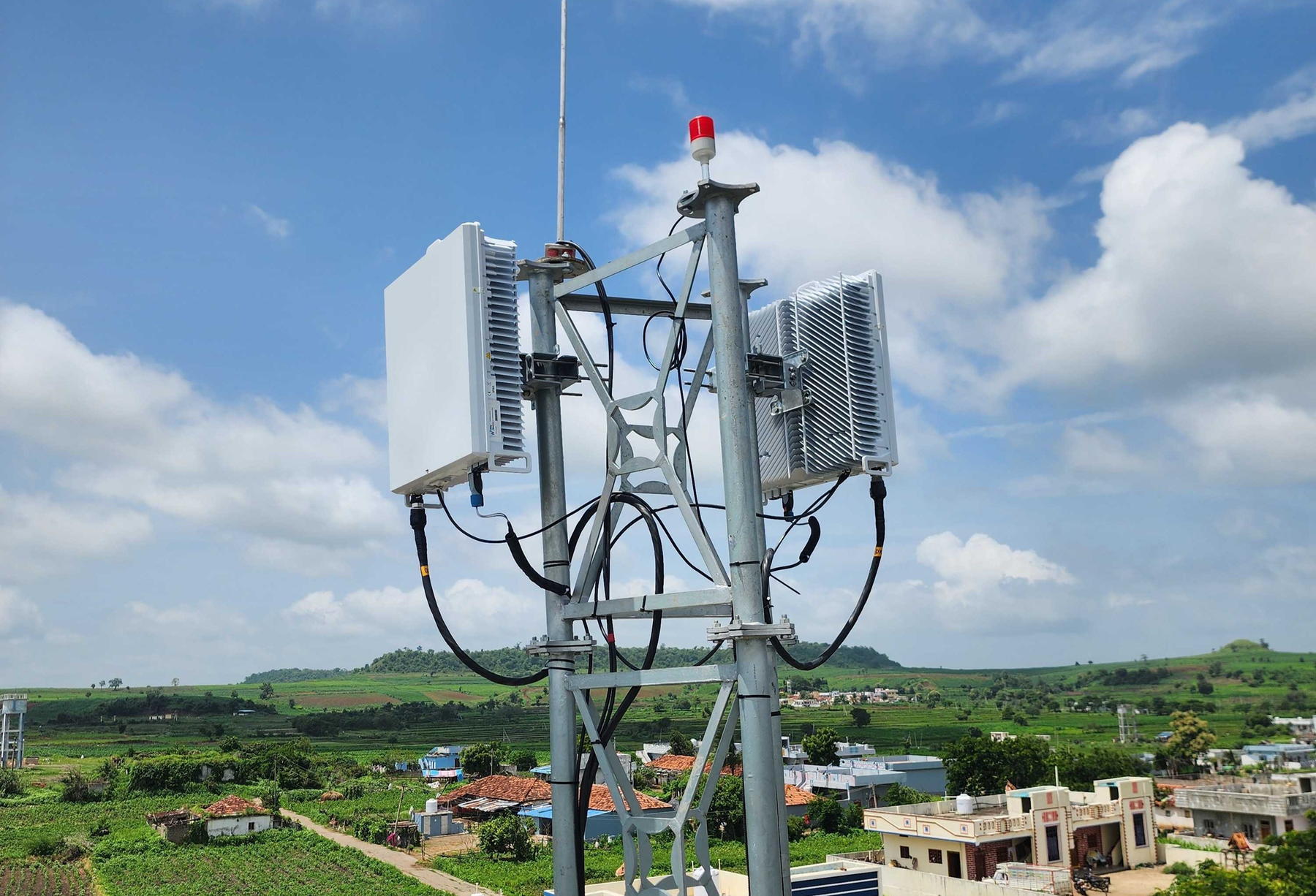
The radio at these sites is our Ravion 32T32R Massive MIMO unit. The distributed and central units also run in university laboratories around the country.
A MeitY-funded fixed wireless site near IIT Hyderabad, serving a community that had never had a fixed connection of any kind.
The village sits several kilometres from the nearest fibre point of presence. Trenching to it had been costed more than once and never approved: the population does not justify the civil works, which is the same calculation that leaves a great many Indian villages unconnected.
The site uses a single Ravion 32T32R Massive MIMO radio on a mast, our 5G base station, and a pole-mounted outdoor fixed wireless terminal at each connected household. The village school runs a smart classroom from the same link, a terminal feeding a screen for interactive lessons. This is what was demonstrated to the Secretary, MeitY.
At this cell size a conventional configuration produces the familiar failure: a strong downlink signal and an uplink that cannot sustain a session. Households would have seen full signal bars and been unable to hold a video call. Careful uplink planning, covering antenna height, beam configuration and scheduling, brought the whole village inside usable service from one site. Navabeam exists to attack that same limit in the radio itself rather than in the planning.
Operator trials, private 5G deployments, interoperability testing or academic collaboration.